

Moving away from chlorine
Hot tub maintenance is changing. While chlorine and bromine were the default for decades, I'm seeing more people switch to greener alternatives. It isn't just about being eco-conscious; heavy chemicals often irritate skin and eyes, making the soak less relaxing than it should be.
Traditional chlorine and bromine sanitizers, while effective, come with drawbacks. Many users experience skin and eye irritation, and the strong chemical odors can detract from the relaxing benefits of a soak. Beyond personal discomfort, these chemicals contribute to combined waste streams and can have negative environmental consequences. Regulations surrounding chemical discharge are also becoming stricter in many areas.
This shift is fueled by a combination of increased consumer awareness and more stringent environmental regulations. People are actively seeking alternatives that are gentler on their bodies and the planet. As a result, manufacturers are innovating, and a wider range of natural and alternative sanitizing systems are gaining traction. We're moving toward a future where a relaxing soak doesn’t have to come at the cost of environmental responsibility.
How salt water systems actually work
Salt water hot tubs aren’t what they sound like – you're not bathing in the ocean. These systems use a process called electrolysis to convert salt (sodium chloride) into chlorine, but it’s a fundamentally different experience than adding chlorine directly to the water. A salt chlorine generator uses an electrical current to break down the salt molecules, releasing low levels of chlorine continuously.
The key difference is the concentration of chlorine. Traditional chlorine addition involves a significant initial dose, leading to peaks and valleys in sanitizer levels. Salt systems produce a much gentler, consistent level of chlorine. This results in less odor, reduced skin and eye irritation, and a softer feel to the water. It’s a more comfortable and natural-feeling experience.
The initial investment for a salt water system is higher than a traditional chlorine setup. You need to purchase the salt chlorine generator itself, which can range from $400 to $1500 depending on the size and features. However, the long-term savings can be substantial. You’ll eliminate the ongoing cost of purchasing chlorine tablets or liquid, and salt is relatively inexpensive. There’s a common misconception about salt systems causing corrosion, but modern generators are designed to prevent this.
Maintenance is generally straightforward, requiring periodic cleaning of the generator cell and monitoring of salt levels. It's not a 'set it and forget it' system, but it does simplify the sanitization process compared to manually adding chemicals. The Sundance Spas SmartTub system, for example, features self-cleaning filters and intelligent chemical monitoring, taking much of the guesswork out of maintenance.
Natural sanitizers worth considering
Beyond salt water, several natural sanitizer options are gaining popularity. These systems aim to minimize or eliminate the use of traditional chemicals, offering a more eco-conscious approach to hot tub maintenance. Each option has its strengths and weaknesses, and the best choice depends on your individual needs and preferences.
Ozone generators are a well-established technology. They work by introducing ozone (O3) into the water, which oxidizes organic contaminants and kills bacteria. Ozone is a powerful oxidizer, but it’s unstable and quickly reverts to oxygen. While effective, ozone systems often require a secondary sanitizer like a small amount of chlorine or bromine to maintain a residual sanitizer level. Costs typically range from $300 to $800 for a residential unit.
UV (ultraviolet) sanitizers are another common choice. These systems use UV-C light to disrupt the DNA of microorganisms, rendering them harmless. UV sanitizers are excellent at killing bacteria and viruses, but they don’t provide a residual sanitizer. Like ozone, they’re often used in conjunction with a small amount of traditional sanitizer. A basic UV system can cost around $200 to $500.
Mineral systems, utilizing silver and copper ions, are also available. These ions have antimicrobial properties and can help to inhibit bacterial growth. However, mineral systems aren't a standalone solution. They work best as a supplement to another sanitizer, and maintaining proper water balance is crucial to prevent staining or discoloration. Many users find they still need to shock treat the water periodically, even with a mineral system in place.
- Ozone generators cost between $300 and $800 but usually need a backup sanitizer to stay effective.
- UV Sanitizers: Cost: $200-$500, No residual sanitizer.
- Mineral Systems: Best as a supplement, Requires water balance monitoring.
Comparison of Eco-Friendly Hot Tub Sanitizing Systems
| Initial Cost | Maintenance | Effectiveness | Environmental Impact | Compatibility with Other Sanitizers |
|---|---|---|---|---|
| Moderate | Regular, but potentially less than traditional chemicals | Medium | Low | Limited - often used *with* a residual sanitizer |
| Moderate to High | Requires bulb replacement; system upkeep | Medium to High (dependent on water clarity) | Low | Limited - best as a supplemental system |
| Low to Moderate | Requires periodic cartridge replacement | Low to Medium | Medium | Better for use with minimal other sanitizers; may need a shock treatment occasionally |
| Moderate | Regular filter cleaning and salt level checks | High (when properly maintained) | Low | Can be used with minimal additional chemicals |
| High | Lower than traditional chemical use | Medium | Low | Best with minimal other sanitizers |
Qualitative comparison based on the article research brief. Confirm current product details in the official docs before making implementation choices.
The biofilm problem
The biggest challenge with natural sanitizers is combating biofilm. Biofilm is a slimy layer of microorganisms that forms on hot tub surfaces – pipes, filters, and the shell itself. It’s a complex community of bacteria, fungi, and other microbes that can be incredibly resistant to traditional sanitizers, and even more so to natural alternatives.
Biofilm forms because hot tubs provide a warm, moist environment with plenty of organic matter (from bathers) for microorganisms to feed on. Natural sanitizers often lack the oxidizing power to fully penetrate and eradicate established biofilm. This can lead to cloudy water, unpleasant odors, and reduced sanitizer effectiveness. Prevention is key.
Regular filter cleaning is absolutely essential. Filters trap debris and provide a perfect breeding ground for biofilm. Backwashing and deep cleaning filters regularly will significantly reduce biofilm buildup. Maintaining proper water circulation is also crucial, ensuring sanitizer reaches all areas of the tub. Water balancing – maintaining proper pH, alkalinity, and calcium hardness – is vital for optimal sanitizer performance.
Before switching to a natural system, a thorough initial cleaning is a must. This often involves a "purge" treatment using a traditional shock oxidizer to eliminate any existing biofilm. Even after switching, periodic purge treatments may be necessary to keep biofilm under control. O-Care, for example, recommends a thorough initial clean and regular use of their shock treatment alongside their natural sanitizer.
Chemistry still matters
"Eco-friendly’ doesn"t mean you can ignore water chemistry. In fact, maintaining proper water balance is more critical when using natural sanitizers. pH, alkalinity, and calcium hardness all play a crucial role in sanitizer effectiveness and equipment longevity, regardless of the sanitizer used.
pH affects the sanitizer’s ability to kill bacteria. If the pH is too high, the sanitizer becomes less effective. Alkalinity acts as a buffer to prevent drastic pH swings. Calcium hardness prevents corrosion and scaling. Getting these levels right ensures your sanitizer works as intended and protects your hot tub components.
Testing your water regularly is essential. You can use test strips for a quick check, but liquid test kits provide more accurate results. Aim for a pH between 7.2 and 7.8, total alkalinity between 80 and 120 ppm, and calcium hardness between 150 and 250 ppm. Adjust levels as needed using appropriate balancing chemicals.
New tech and hybrid setups
Looking ahead to 2026, we’re seeing a growing trend towards hybrid systems. These combine the benefits of different sanitizing methods to achieve optimal results. For example, using a salt water system with a small amount of MPS (monopersulfate) as a supplemental oxidizer can provide enhanced water clarity and reduce the risk of biofilm formation.
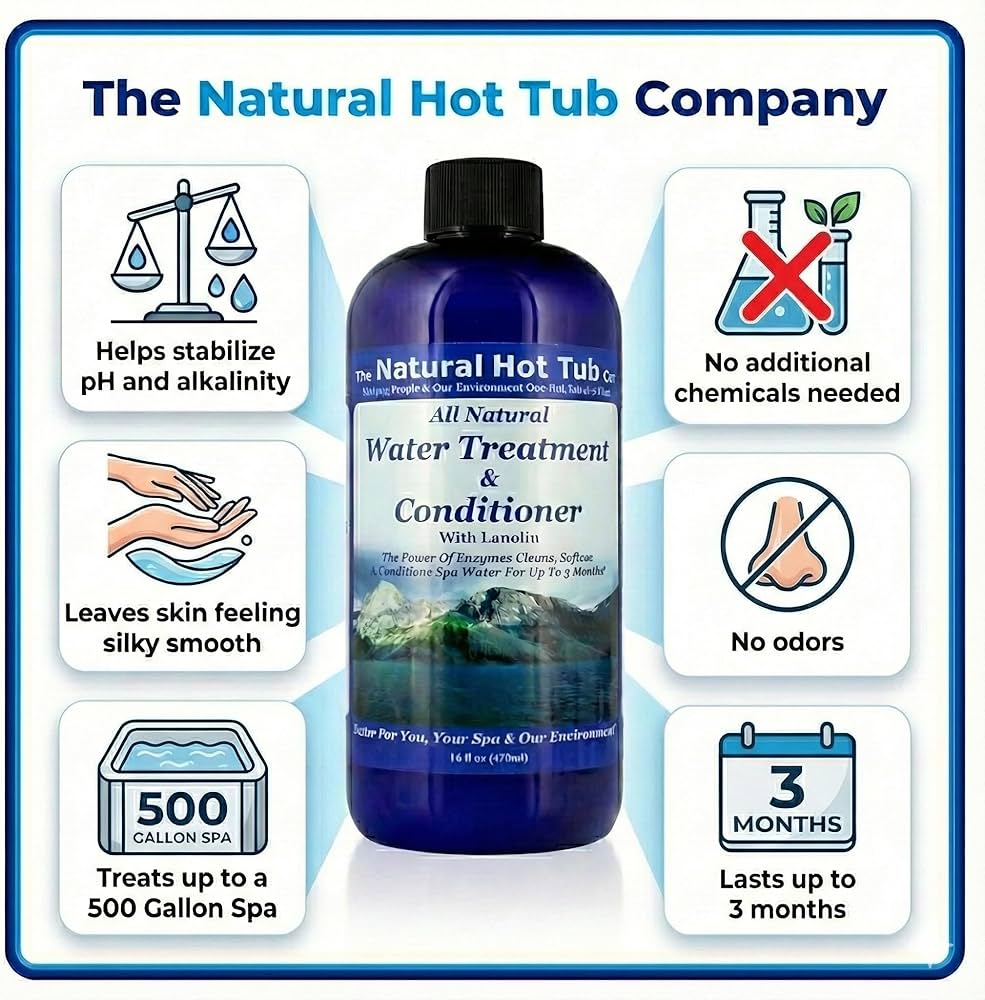
There’s also increasing research into new natural sanitizer formulations. Enzyme-based cleaners are gaining traction, as they break down organic contaminants without harsh chemicals. Plant-based compounds with antimicrobial properties are also being explored. While these technologies are still relatively new, they hold promise for the future of eco-friendly hot tub maintenance.
Innovations in monitoring technology are also playing a role. Smart systems that automatically adjust sanitizer levels and monitor water chemistry are becoming more common, making it easier to maintain a healthy and balanced hot tub environment. These systems reduce the guesswork and help ensure optimal water quality.
No comments yet. Be the first to share your thoughts!