

The Rising Tide of Saltwater Systems
The hot tub industry is shifting towards saltwater systems, influenced by health and wellness trends expected to grow by 2026. People are seeking gentler, more natural self-care methods, including their hot tub experience.
Traditional chlorine systems, once the standard, are now often criticized for causing dry, itchy skin, red eyes, and a strong chlorine smell. The move to saltwater is driven by a desire for a more restorative experience and a holistic approach to well-being, considering all aspects of self-care.
This preference for less chemically intensive experiences extends beyond hot tubs to swimming pools and household cleaning products. Growing awareness of chemical impacts on health and the environment is driving demand for safer alternatives, indicating a fundamental shift in wellness perspectives.
Consumer interest in alternatives to traditional hot tub chemicals is growing, with a willingness to invest in systems that prioritize health and comfort. This demand is spurring manufacturers to develop more advanced saltwater solutions.

Saltwater vs. Chlorine: What’s Actually Happening?
Saltwater hot tubs are not chlorine-free; they generate chlorine differently. A salt cell uses electrolysis to convert salt (sodium chloride) into chlorine, sanitizing the water similarly to traditional systems, but with a key distinction.
The key difference lies in how the chlorine is delivered. With traditional systems, you typically add a concentrated dose of chlorine – a “shock” – which creates a high initial level that gradually dissipates. Saltwater systems, on the other hand, produce a constant, low level of chlorine. This provides continuous sanitation without the peaks and valleys associated with manual chlorine additions.
A traditional system provides a burst of energy, while a saltwater system offers a steady hum. The consistent chlorine level is gentler on skin and less irritating. While it reduces the need for frequent shocking, it doesn't eliminate it entirely. This makes saltwater systems a good choice for those with sensitive skin or allergies.
Hot Spring Spas highlights that continuous chlorine generation offers a more consistent and comfortable soaking experience, focusing on the delivery method rather than elimination.
Skin & Sensitivity: The Core Benefit
For many, the primary draw of a saltwater hot tub is the positive impact on skin health. Lower, more consistent chlorine levels are significantly less irritating than the high concentrations found in traditionally chlorinated tubs. This is a game-changer for people who struggle with skin conditions like eczema, psoriasis, or simply chronically dry skin.
Traditional chlorine strips skin of natural oils, causing dryness, itchiness, and flare-ups. The gentler chlorine from saltwater systems is less likely to cause these issues. Many hot tub owners who switched to saltwater have reported significant relief from skin irritation.
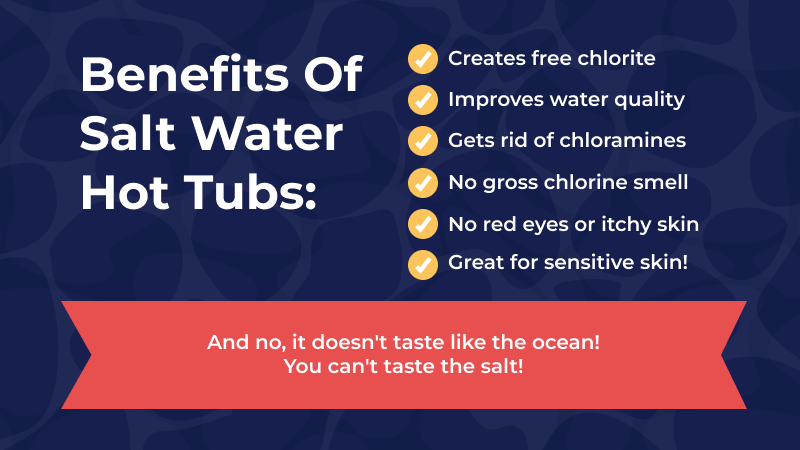
Contact lens wearers benefit from saltwater systems due to reduced chlorine levels that minimize eye irritation, offering a more comfortable soak without the burning sensation common with traditional chlorine.
Swimming Pool Services notes that saltwater systems are less damaging to the skin’s natural barrier, potentially reducing the need for lotions and moisturizers. For example, one customer, Sarah M., who had stopped using hot tubs due to skin sensitivity, now enjoys her saltwater tub regularly without issues.
Beyond Skin: Other Health Perks
Beyond skin health, saltwater systems offer reduced eye and respiratory irritation, eliminating red, stinging eyes and chlorine-induced coughs. This comfort allows for deeper relaxation and greater enjoyment of hydrotherapy's benefits.
The absence of a strong chlorine odor is another advantage. Unlike traditional tubs with pungent smells that linger on skin and hair, saltwater systems produce a much milder odor, enhancing the overall experience.
Some users report improved hair health with saltwater systems, noting the gentler water is less damaging. While scientific evidence is limited, this anecdotal observation suggests lower chlorine levels may contribute to healthier hair.
A more pleasant soaking experience offers psychological benefits, allowing for full unwinding and de-stressing without irritation or unpleasant smells.
Maintenance Realities: Salt Systems Compared
Saltwater systems require regular attention, similar to traditional chlorine tubs. Monitoring salt levels and adding salt every few months, depending on usage, is necessary. The salt cell also needs periodic inspection for scaling and cleaning.
Saltwater tubs still require occasional shocking. While consistent chlorine production reduces the frequency, periodic boosts are necessary to eliminate organic contaminants and maintain water clarity, especially after heavy use.
The maintenance workload for saltwater systems is different, not necessarily easier or harder, than traditional chlorine systems. It involves swapping regular chlorine additions and shocking for salt level monitoring and salt cell maintenance, a trade-off some find more convenient.
Troubleshooting saltwater systems involves checking the salt cell, salt levels, and any scaling or buildup. A test kit is essential for monitoring salt and chlorine levels, and warning lights or error messages should not be ignored.
- Check salt levels regularly: Use a reliable test strip or digital meter.
- Inspect the salt cell: Look for scaling or buildup and clean as needed.
- Shock the tub periodically: Even saltwater tubs need occasional chlorine boosts.
- Monitor water chemistry: Maintain proper pH and alkalinity levels.
Top Saltwater Hot Tub Picks for 2026
Choosing a saltwater hot tub depends on budget, space, and desired features. Here are a few models to consider for 2026.
Hot Spring Grandee: This is a premium option known for its exceptional energy efficiency and comfortable seating. It features the SaltCare system, which simplifies water maintenance. It's a significant investment, typically starting around $12,000.
Jacuzzi J-385: A popular choice offering a balance of features and affordability. The ClearRay UV-C system complements the saltwater system for enhanced sanitation. Prices generally start around $8,000.
Caldera Paradise: Caldera tubs are known for their reliability and comfortable jets. The saltwater system is easy to use and maintain, offering a hassle-free soaking experience. Expect to pay around $7,500 and up.
Fantasy Spas Maui: For those on a tighter budget, the Fantasy Spas Maui offers a surprisingly feature-rich experience at a more accessible price point. It includes a saltwater system and comfortable seating, starting around $5,000.
These are just a few examples, and the market is constantly evolving. It’s important to do your research and compare different models before making a decision. Consider factors like jet placement, seating configuration, and energy efficiency.
Featured Products

Inflatable and portable design for easy setup and relocation · Saltwater system ready for a gentler spa experience · Accommodates up to 6 people
This inflatable hot tub is saltwater system ready, offering a convenient and comfortable entry into the world of gentler, natural spa experiences.

Converts existing hot tubs and swim spas to a saltwater system · Suitable for spas up to 2000 gallons · Generates chlorine naturally from salt
This conversion kit provides an accessible and cost-effective way to upgrade your current hot tub to a saltwater system, aligning with health trends for a more natural spa.
Inflatable and portable design for easy setup and relocation · Saltwater system ready for a gentler spa experience · Accommodates up to 6 people
This inflatable hot tub is saltwater system ready, offering a convenient and comfortable entry into the world of gentler, natural spa experiences.

Pure sodium chloride specifically formulated for hot tubs and spas · Designed for use with salt chlorine generators and saltwater care systems · 8 lb bag provides ample supply for regular maintenance
This pure spa salt is essential for maintaining your saltwater hot tub's system, ensuring a consistently clean and natural bathing experience.
As an Amazon Associate I earn from qualifying purchases. Prices may vary.
Cost Breakdown: Long-Term Savings?
The initial purchase price of a saltwater hot tub is often higher than a comparable traditional chlorine tub. You also need to factor in the cost of the salt cell, which typically ranges from $300 to $800 and needs to be replaced every 3-5 years. Ongoing salt costs are relatively low – a 40lb bag of salt typically costs around $20-$30 and can last for several months.
However, you may save money on traditional hot tub chemicals like chlorine, shock, and algaecide. Over the long term, the savings on chemicals could offset the higher initial cost of the saltwater system, but it depends heavily on your usage and maintenance habits. If you’re diligent about maintaining the system and minimizing chemical additions, you’re more likely to see cost savings.
Potential repair costs should also be considered. Salt cells can fail, and replacing them can be expensive. However, saltwater systems are generally less corrosive than traditional chlorine systems, which could potentially reduce the need for other repairs. It's a complex equation, and there's no one-size-fits-all answer.
Ultimately, the financial benefits of a saltwater system are not always clear-cut. It's important to weigh the initial investment, ongoing costs, and potential savings before making a decision. Focus on the long-term value and the health benefits, rather than solely on the bottom line.
Saltwater vs. Chlorine Hot Tub Systems: A Comparison
| Criteria | Saltwater Systems | Chlorine Systems |
|---|---|---|
| Initial Cost | Generally Higher | Generally Lower |
| Ongoing Chemical Cost | Lower | Higher |
| Maintenance Effort | Moderate - Requires salt monitoring & occasional cell cleaning | Moderate - Requires regular shocking and water balancing |
| Skin Sensitivity | Better for sensitive skin - Gentler oxidation process | Can cause irritation for some - Stronger chemical presence |
| Odor | Minimal - No strong chlorine smell | Noticeable chlorine odor |
| Environmental Impact | Lower - Reduced chemical usage | Higher - More chemical usage and potential runoff |
| Water Feel | Softer, silkier feel | Can feel harsher |
| System Complexity | Moderate - Requires salt chlorine generator | Simpler - Traditional chemical addition |
Qualitative comparison based on the article research brief. Confirm current product details in the official docs before making implementation choices.
Future Trends: What’s Next for Hot Tub Water?
The evolution of hot tub water treatment is far from over. We’re likely to see continued innovation in salt chlorination technology, with more efficient and reliable salt cells. Alternative sanitization methods, such as UV and ozone systems, are also gaining traction and may become more prevalent in the future.
UV systems use ultraviolet light to kill bacteria and viruses, while ozone systems use ozone gas. These technologies can complement saltwater systems, reducing the need for chlorine and further improving water quality. Combining multiple sanitization methods is becoming increasingly common.
There’s also a growing demand for eco-friendly hot tub solutions. Manufacturers are exploring ways to reduce water consumption, minimize chemical usage, and use more sustainable materials. This trend is driven by both consumer demand and environmental concerns.
The future of hot tub water treatment is likely to be characterized by a combination of advanced technologies, sustainable practices, and a continued focus on health and wellness. It’s an exciting time to be a hot tub owner.


No comments yet. Be the first to share your thoughts!