
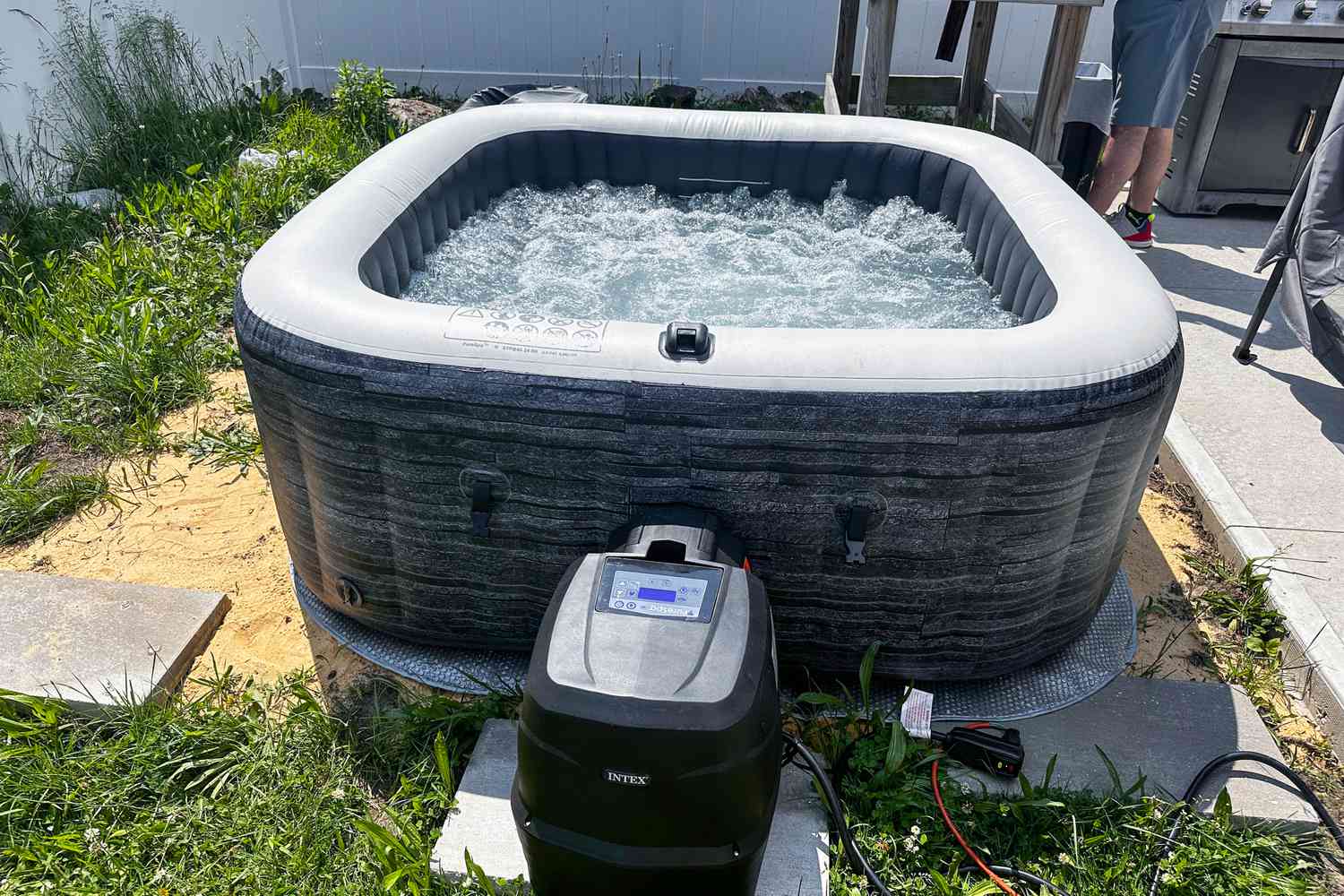

Intex Hot Tubs: Budget-Friendly Reality Check
Intex dominates the entry-level inflatable hot tub market, offering models that typically retail between $400 and $700. These units provide a functional entry point for casual users who want to soak without committing to a permanent structure. However, the low price tag comes with distinct tradeoffs in material thickness and heating efficiency compared to premium brands like Coleman or SaluSpa.
When evaluating an Intex model for your budget, focus on the Intex PureSpa series. These tubs are constructed with three layers of PVC, which is thinner than the reinforced laminates found in higher-end competitors. This means you will likely need to run the heater more frequently to maintain temperature, especially in cooler climates. The tradeoff is clear: you save money upfront but may spend slightly more on electricity over the unit's lifespan.
Longevity is the most critical factor for budget buyers. An Intex inflatable hot tub generally lasts between two to three years with regular use and proper maintenance. Common issues include punctures from sharp debris and pump failures if the water chemistry is neglected. To maximize the life of your investment, always use a high-quality thermal cover and test the water pH levels weekly. If you are looking for a tub that lasts longer than three years, consider saving for a SaluSpa, but for seasonal or occasional use, an Intex offers sufficient value at its price point.
Shortlist real options
Intex dominates the inflatable hot tub market because it offers a practical entry point into hydrotherapy without the cost or permanence of a hard-shell spa. When choosing between models, the decision usually comes down to capacity, heating speed, and filter complexity. We compared the most popular PureSpa and CrystalSpa models to help you find the right fit for your household size and budget.
The following comparison table breaks down the core specifications of the leading Intex inflatable hot tubs. These models share common features like the Intex DuraPlus puncture-resistant material and the Intex 28461E filter cartridge, but they differ significantly in jet count, insulation, and water capacity.
| Model | Capacity | Jets | Heating | Insulation |
|---|---|---|---|---|
| PureSpa Plus (4-Person) | 291 gallons | 60 air jets | Up to 104°F | Standard DuraPlus |
| PureSpa Plus (6-Person) | 330 gallons | 100 air jets | Up to 104°F | Standard DuraPlus |
| PureSpa Elite (4-Person) | 291 gallons | 110 air jets | Up to 104°F | Thermal Lock 3-Wall |
| PureSpa Elite (6-Person) | 330 gallons | 140 air jets | Up to 104°F | Thermal Lock 3-Wall |
| CrystalSpa (4-Person) | 291 gallons | 100 air jets | Up to 104°F | Thermal Lock 3-Wall |
| CrystalSpa (6-Person) | 330 gallons | 140 air jets | Up to 104°F | Thermal Lock 3-Wall |
The PureSpa Plus series is the best starting point for first-time buyers. It includes the essential bubble massage and heating functions at a lower price point. The 4-person model is ideal for couples or small families, while the 6-person version offers more room for social gatherings. Both models heat water efficiently, though the 4-person model may take longer in colder climates due to its smaller water volume.
For those seeking better heat retention and a more robust build, the PureSpa Elite and CrystalSpa lines are worth the extra investment. These models feature the Thermal Lock 3-Wall construction, which significantly reduces heat loss compared to the standard DuraPlus material. The CrystalSpa models often include a dedicated hard top cover, which provides superior insulation and debris protection when the tub is not in use. The increased number of air jets in the Elite and CrystalSpa models also delivers a stronger massage experience, making them better suited for users with muscle tension or those who prioritize hydrotherapy over simple soaking.
Inspect the expensive parts
2026 guide: Top Intex, Coleman & SaluSpa Inflatable Hot Tubs + Salt Water Conversion Tips works best as a clear sequence: define the constraint, compare the realistic options, test the tradeoff, and choose the path with the fewest hidden costs. That order keeps the advice usable instead of decorative. After each step, pause long enough to check whether the recommendation still fits the reader's actual situation. If it depends on perfect timing, unusual access, or a best-case budget, include a simpler fallback.
Plan for ownership costs
An inflatable hot tub is not a one-and-done purchase. The initial sticker price is just the entry fee; the real cost comes from keeping the water clean and the system running. If you treat it like a disposable toy, you will replace it every season. If you treat it like a small pool, it can last for years.
The hidden energy bill
Heating water is expensive. Inflatable tubs have thin walls and poor insulation compared to hard-sided models. In colder climates, the heater runs constantly to maintain temperature, which can double or triple your monthly electric bill during winter. A cover is not optional—it is the single most important tool for cost control. Without a sealed cover, heat escapes rapidly, forcing the pump to work overtime.
Maintenance and chemical costs
You cannot skip maintenance. Saltwater conversion kits (like those compatible with Intex or Coleman models) reduce chlorine odor but do not eliminate the need for testing. You still need to check alkalinity, pH, and sanitizer levels weekly. Test strips, pH balancers, and shock treatments add up. A single algae bloom can ruin a $500 tub in 48 hours if you miss early signs. Budget roughly $20–$40 per month for chemicals and filter replacements.
When cheap stops being cheap
The cheapest Intex or SaluSpa models often lack durable liners and efficient pumps. If the pump fails after one season, you are out $300 plus shipping. Higher-end models with "Crystal Blue" filtration or thicker vinyl layers cost more upfront but last longer. Look for models with puncture-resistant layers and replaceable filters. If a tub requires constant patching or chemical balancing, it is no longer a bargain.


As an Amazon Associate, we may earn from qualifying purchases.
Saltwater conversion reality check
Converting to saltwater is popular for softer skin and less chlorine smell, but it is not maintenance-free. Salt cells corrode over time and need replacement every 1–2 years. The conversion kit itself costs $100–$150. If you live in a hard water area, scale can build up on the cell, requiring regular cleaning. For most users, traditional chlorine or bromine is cheaper and simpler. Saltwater is a convenience upgrade, not a cost saver.
Longevity expectations
With proper care, a mid-range inflatable hot tub lasts 3–5 years. Cheap models may last only 1–2 seasons. Key factors:
- Winterization: Drain and dry completely if freezing.
- Cover use: Always cover when not in use.
- Water changes: Full water change every 3–4 months.
- Filter care: Rinse filters weekly; replace every 2–3 months.
Neglect any of these, and your "cheap" tub becomes a $1,000 mistake.
Intex hot tubs: what to check next
Before committing to an inflatable spa, it helps to separate marketing claims from practical reality. Intex PureSpa models are generally reliable for seasonal or casual use, but they require specific maintenance habits to avoid common pitfalls. Here are the answers to the most frequent questions we see from buyers.
No comments yet. Be the first to share your thoughts!